The holidays are hard for most children and adults. But for children navigating Sensory Processing Disorder, Autism, or ADHD, the large groups of people, over stimulation, and changes in routine can send the whole day into a downward spiral. I learned—many times after the fact—that the best way to help my children (and myself) was to prepare for the good, the bad, and the ugly ahead of time.
Below are the practical strategies that truly helped our family during the holidays.

Tips for a Smoother, Calmer Holiday Season
1. Protect Sleep and Down Time
We all know that a tired child is a ticking time bomb—especially when sensory needs are involved. When the child is physically or emotionally done, end the activity—even if everyone else wants “one more.” Active days guaranteed night terrors for Bubs, so we built in quiet pockets: baths, books, Legos, coloring, anything peaceful to let his body reset.
Sleep is your holiday superpower. Later nights and overstimulation led straight to meltdowns in our home. And with Sensory Processing Disorder, these meltdowns can be ugly and last a long time. Protect bedtime as much as possible.
2. Create a Safe Space
We set up a small, quiet space where Bubs could retreat when he felt overwhelmed—a tent, a corner, or even a large closet with Legos, books, and coloring supplies. We practiced at home recognizing his own overload signals so he could ask to go there. When we were away from home, my husband or I periodically pulled him into a calm one-on-one activity: reading a book, cooking, or playing a quiet game. Longer visits always included creating a designated safe space where we were staying that he could use.

3. Be Realistic About the Child’s Limits
Holiday expectations shouldn’t exceed everyday expectations. We learned this the hard way by trying to force holiday naps on Bubs. I knew he needed rest, but he simply couldn’t settle enough to sleep. Quiet time turned out to be enough and far more successful.
4. Explain, Explain, Explain
Holiday parties, new people, and crowded restaurants can be overwhelming. I explained as much as I could ahead of time—and then re-explained when plans inevitably changed. I pulled the child close, talked quietly, and answered questions. Showing pictures of people we would see helped make new situations not feel as overwhelming.
5. Set Restaurant Expectations Ahead of Time
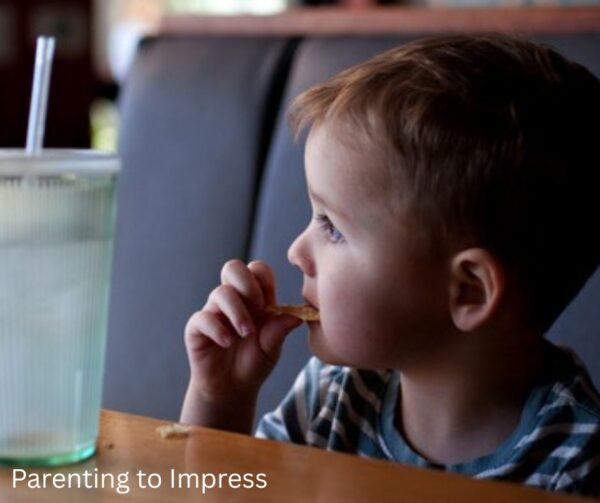
Before leaving for a restaurant, each of our children chose one quiet toy from a small selection to place in a bag. That toy stayed in the bag until we were seated at a table. I talked through expectations: where the child would sit, behavior expectations, food choices, and our plan if things became hard. I always kept Bubs next to me so I could whisper encouragement or gently rub his back. To help balance it, I tried to also sit a second calm person on his other side.
6. Stayed Within Arm’s Reach
In high-energy situations, excitement spread fast. Little Man and Bubs escalated quickly and struggled to come back down. My husband or I kept the boys close so we could redirect early—usually not as discipline, but simply as prevention.

7. Prepare for Gift Opening
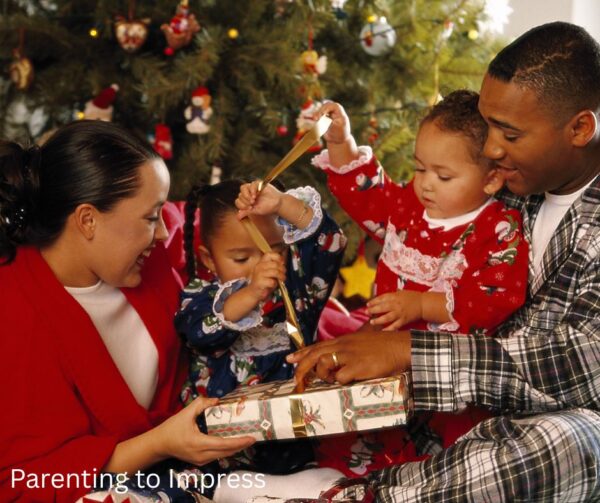
Practice gratitude ahead of time—especially for gifts they don’t love. We role-played ahead of time how to respond to gifts they loved and gifts they didn’t. The kids discovered how to find one positive thing: the color, the size, the feel, anything honest and kind.
8. Be Prepared with Calming Techniques That Work
Back rubs helped both boys, but holding Bubs tightly sent him straight into fight-or-flight. If a certain item or sensory tools helped, we packed it. To this day, I still have a fidget spinner in my purse. And when needed, my husband and I removed the child from the situation as a change of environment often stopped a meltdown before it grew into a raging fire.
9. Don’t Push New Foods During the Holidays
Holiday meals often included unfamiliar foods. At home, we expected one “thank-you bite.” But during the holidays, that rule took a break. It wasn’t the time to battle over taste buds and vegetables. Instead, we focused on what to say or do when offered something they didn’t like.
10. Teach How to Handle Adult Conversations
Practice at home respectful interruption with a simple hand-on-arm signal. When I felt that little hand on my arm, I placed mine over theirs to acknowledge their needs, then paused the conversation when I could. It was simple and worked beautifully.
11. Be Proactive
Role-play common holiday challenges: sharing toys, greeting relatives, table manners. Make it fun by using stuffed animals or Lego people. Practicing ahead of time made a big difference.
12. Respect Your Hosts and Guests
Training happens at home. (I cannot emphasize this one enough!) Although expectations and boundaries need to be firm whether at home or away, a little grace may need to occur out of respect for everyone present. Holiday gatherings are not the time to force long meals, finish-your-plate battles or hold a 30- minute time out battle. If correction is needed, take the child aside and handle it as quickly as possible so you can return to your hosts and guests.
We brought what was needed instead of expecting the host to adapt everything. And for partially potty-trained children, we used a diaper or training pants over underwear during gatherings to protect everyone’s stress level.
13. Set Realistic Expectations
For the child:
We knew the situations that led to success and the ones that tipped Bubs and Little Man toward meltdowns. I learned to advocated for the boys. Sometimes this meant telling family that we wouldn’t be able to participate in a full day of activities but would attend part of the day instead. It was also important to celebrate with my child every small victory, acknowledging when they were working really hard.
For my spouse:
As a young wife, once outside our home, I placed a lot of unspoken expectations on my husband. Because my husband wasn’t a mind reader, this created tension that wasn’t helpful for anyone. We learned to discuss expectations before arriving: acceptable behaviors, nap plans, where we would offer grace, and when we would leave. A united front helped the child feel secure, and it respected my husband.
For extended family:
Most people simply didn’t understand the exhaustion and requirements of parenting a child with special needs. Let’s get real – words hurt. I slowly learned to let the hurtful ones slide and to focus on who I was in Christ and the calling He gave me. Sometimes a pre-holiday phone call helped bridge gaps and explain what Bubs or Little Man needed to succeed: quiet time, a routine bedtime, a safe space.
For myself:
Things still went wrong. My children and husband weren’t perfect, and neither was I. To handle surprises, I had to make sure my cup was full of time with God, quality sleep, good nutrition, and movement. And I had to leave pride at the door, focusing on what was truly best for each of my children and our family rather than what onlookers thought I should do.
Friend, if the holidays feel big, loud, unpredictable, or exhausting—you are seen. You are doing gospel work in loving and advocating for your child. Even with the best preparation, things won’t always go perfectly, but God gives wisdom, strength, and grace for each moment. You’re not alone in this journey.