As a child, I remember feeling confused by the phrase fruit of the Spirit. Why fruit? Apples and bananas made sense. Patience and kindness? Not so much. If you have ever tried to explain this to a preschooler and found yourself stumbling a bit, you are not alone.
What Is the Fruit of the Spirit?
When the Bible talks about the Fruit of the Spirit, it is referring to the character qualities that grow in us as we follow God and allow Him to work in our hearts.
Galatians 5:22-23 (NIV) says, “But the fruit of the Spirit is love, joy, peace, patience, kindness, goodness, faithfulness, gentleness and self-control. Against such things there is no law.
The idea is actually beautiful when you think about it. Just as a healthy tree naturally produces fruit, a heart growing closer to God begins to show evidence too. That evidence is seen in how we treat others and respond to hard moments.
Helping Preschoolers Understand “Fruit”
Many years ago, I came across a simple explanation in Clubhouse JR magazine by Christian Elden (January 2010 issue) that stuck with me.
“The more you get to know God, you will want to be like Him – loving, kind, patient…. And with God’s help, you can grow to be healthy, strong, and beautiful inside. Then you’ll be like a tree covered with bright, yummy fruit! And your fruit – the way you treat others – will make God smile.”
What a sweet picture for children to understand.
And honestly, it is a good reminder for us parents too.
Our Goal Is Heart Training
It is easy to focus only on behavior.
Stop hitting.
Use kind words.
Share your toys.
Those things matter, of course. But underneath behavior is something deeper: the heart.
When a child chooses kindness over anger or shows patience while waiting, those are opportunities to point them back to God’s work in them. Instead of only correcting wrong behavior, we can teach why kindness, patience, or self-control matter.
Practical Ways to Teach the Fruit of the Spirit at Home
Over the years, we have tried several simple ways to make the Fruit of the Spirit part of everyday family life. None of these ideas are fancy, but they create natural moments for heart conversations.
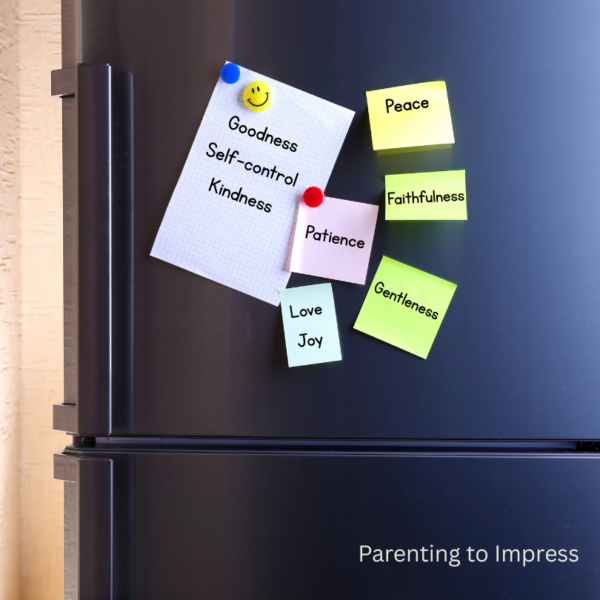
1) Fruit of the Spirit Refrigerator Reminder
For a season, I hung a piece of paper on our refrigerator with each Fruit of the Spirit listed. When one of my children demonstrated kindness, patience, or self-control, we celebrated it.
“You showed gentleness with your brother. That made God smile.”
But we also used those moments when attitudes or choices were not so kind. Instead of simply saying, “Stop that,” I would ask, “Was that showing patience?” “What fruit could help you right now?” “How could we handle that situation differently?”
Those conversations turned discipline moments into teachable moments.
2) Fruit of the Spirit in Daily Conversations
Everyday life provides ample opportunities to discuss the Fruit of the Spirit.
At the grocery store: “That was patient waiting.”
While playing with siblings: “You shared so kindly.”
During frustration: “I know this is hard. Let’s practice self-control together.”
The more children hear these words, the more familiar they become.
3) Focus on One Fruit at a Time
Teaching all nine fruits at once can feel overwhelming, especially for preschoolers. Try focusing on one each week or month.
Read Bible stories that highlight each character. Talk about what it looks like. Celebrate when you notice it. Pray together and ask God for help growing that fruit in your family. The ABCJesusLovesMe 4 Year Curriculum includes a weekly character pulled from a Bible story.
For example:
- Teaching Patience to Preschoolers: Practice waiting for small things, play turn-taking games, and talk about how waiting can be hard for everyone—even adults.
- Teaching Kindness to Children: Look for simple ways to serve others, encourage siblings, or brighten someone’s day.
- Teaching Self-Control to Preschoolers: Help a child pause before reacting, use calming strategies, and practice making wise choices.
Little by little, these truths sink in.
Remember: Growth Takes Time
Fruit does not appear overnight on a tree, and character does not grow overnight in children. There will be hard days. Days when patience seems nowhere to be found and self-control feels impossible. Keep planting seeds anyway.
And one day, Lord willing, you may look at your child and realize—you are beginning to see fruit growing.
How do you intentionally teach the Fruit of the Spirit in your home? I would love to hear your ideas.





Thank you for sharing “Understanding the Fruit of the Spirit with Preschoolers.”
It’s interesting and provides simple but practical ways that is aged appropriate for preschoolers.
Thank you for your time, and resources. It’s greatly appreciated!!!
Malini – Glad it was helpful! Reach out if there is anything else I can help with! –heidi