Few behaviors feel as frustrating, overwhelming, and honestly embarrassing as biting. Whether it happens at home or in a preschool setting, it can leave adults feeling defeated, apologetic, and unsure of what to do next. Questions start swirling—Why is this happening? Am I doing something wrong? Will this ever stop?
The good news is that biting is a common developmental behavior. With understanding, consistency, and intentional guidance, the child can learn better ways to express big feelings—and this difficult stage can become a powerful opportunity for growth.

Why Young Children Bite
Biting is not a sign of a “bad” child. It is most often a sign of an overwhelmed child.
Young children bite because they do not yet have the language or tools to appropriately express anger, frustration, fear, or the need for space. When emotions rise faster than words can form, the body reacts. Biting becomes communication when communication skills are still developing.
This is especially common in toddlers and young preschoolers who are learning social boundaries but don’t yet know how to properly manage them.
Look for the Pattern Behind the Biting
When biting is frequent, it is important to become a careful observer. Take note of what happens before the bite:
- Is the child biting the same child repeatedly?
- Does it happen in the same center or over the same toy?
- Is the child being crowded or pestered after trying to say “no”?
- Are there physical cues—tight fists, stiff body, pacing, growling, or whining—that show frustration is building?
Biting rarely comes out of nowhere. There is almost always a trigger, and finding that trigger gives adults the opportunity to step in sooner and teach instead of react.
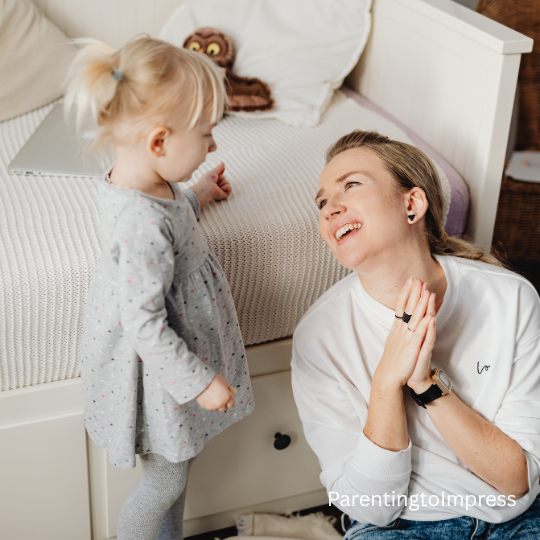
Replace the Behavior—Don’t Just Stop It
For every negative behavior, a positive behavior must be taught. Simply telling a child “Don’t bite” is not enough. The child needs to be shown what to do instead. This is training, not punishment.
Train the child to do one of the following when they feel overwhelmed or frustrated:
- Say “Stop” or “No”. For those without words, train them how to sign “stop.“
- Ask for help
- Walk away
- Hold hands behind the back
- Use a calm-down space or tool
These skills must be practiced when the child is calm, not in the heat of the moment.
Practice Through Role Play
Role play is one of the most effective tools for teaching young children.
Act out simple scenarios:
- Someone takes a toy
- Someone stands too close
- Someone won’t stop touching
Practice the words, the body posture of the other child, and the actions together. Keep it short, playful, and repetitive. When the situation happens in real life, the child’s brain will recognize the pattern and be more likely to use the new skill.
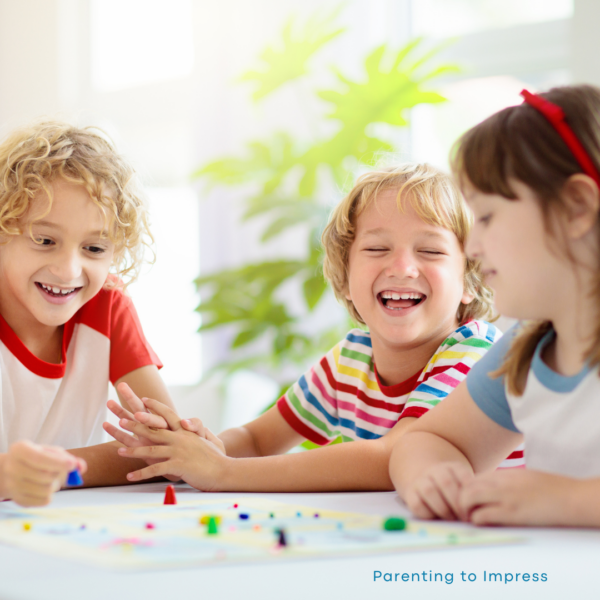
Catch the Child Before the Bite Happens
The real growth happens when adults step in early. Watch for the cues that frustration is building and intervene before the bite:
- Name the feeling: “I see you’re getting frustrated.”
- Prompt the replacement skill: “Tell him ‘no’” or “Let’s ask for help.”
- Physically support space if needed.
This is where learning sticks. The child feels understood, supported, and guided—not shamed.
It is also important to watch the child who is continually in the child’s space or is taking the child’s toy causing the frustration. This child needs training as well.
Stay Calm, Consistent, and Encouraging
Biting can bring out big emotions in adults, especially when another child is hurt. But training and calm, consistent responses teach the most.
With time, modeling, and practice, the child learns that big feelings can be handled in safe, appropriate ways. And that is a skill that lasts far beyond the biting stage.