There are moments when everything seems fine one second, and the next, the child is completely overwhelmed. I saw it often in my own home—usually when noise, emotions, and too much stimulation built up faster than one of my kiddos could process.
In those moments, movement became one of the most effective tools in my parenting toolbox. I remember how jumping on the trampoline just a few minutes could take my child from a full meltdown to calm, almost like it reset his entire little body and helped him regain control.
But life didn’t keep us only at home. We were in stores, in the car, at church, and running everyday errands where a trampoline simply wasn’t an option. That’s when I had to learn simple sensory input ideas that worked anywhere, not just in the ideal moments.

Sensory Input – A Simple Explanation
If you are unfamiliar with sensory input, sensory processing refers to how the body takes in and responds to information through the senses like sound, touch, movement, etc. Some children process this input easily, while others need more support or time to regulate their responses. In cases where the child has Sensory Processing Disorder, Occupational Therapy is needed to provide additional support.
Whether the child tends to be more sensitive (over-responsive) or seeks more input (under-responsive), intentional sensory activities can help the body and brain reset and function more calmly.
For example, Bubs used to become overwhelmed by loud sounds. Little Man sought constant movement and could spin for a long time without getting dizzy. Both needed very different kinds of support, but both benefitted from sensory input.

Teaching the Child to Respond
Over time, my goal was to help the boys recognize what their bodies needed and respond in healthy ways instead of melting down.
We’ve moved through three stages:
- Adult-led support
“You are feeling overwhelmed. You need to jump for a few minutes.” - Adult offers choices
“You are getting upset. You can do wall pushups or jump in place. Which will you choose?” - Child-led awareness
“I feel restless. I need to move my body.”
This gradual shift helps the child build awareness and responsibility over time.
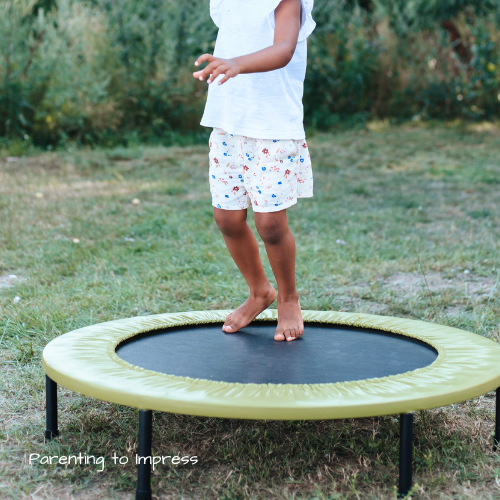
Sensory Input Toolbox (Away-from-Home Ideas)
While a trampoline is still my favorite tool, as stated, real life doesn’t always allow for that. Here are a few simple sensory input ideas that can be used almost anywhere—even in a store or while running errands:
- Wall pushups or chair pushups
- Jumping, skipping, or crawling short distances
- Carrying something heavy (books, bags, groceries)
- Pushing or pulling something with weight (like a cart)
- Slow, deep breathing
- Tossing and catching a soft item
- Wearing a weighted backpack (planned ahead)
These are simple, discreet tools that can help the child regulate in the moment without needing a big interruption.
Real-Life Examples
- Little Man is a whirlwind moving from one activity to another. Adding a few books to a backpack and having him wear it provides calming pressure and helps him become less impulsive.
- Bubs is upset over an issue with a sibling and is struggling to calm down. I instruct him to do 15 wall pushups to provide physical release and help reset his emotions.
- We are in a crowded place and Bubs is becoming overwhelmed. While holding his hands, I lead him to jump in place to help him relax.
For these strategies to work best they must be practiced at home first. The child needs familiarity with the tools before using them in public or stressful moments.
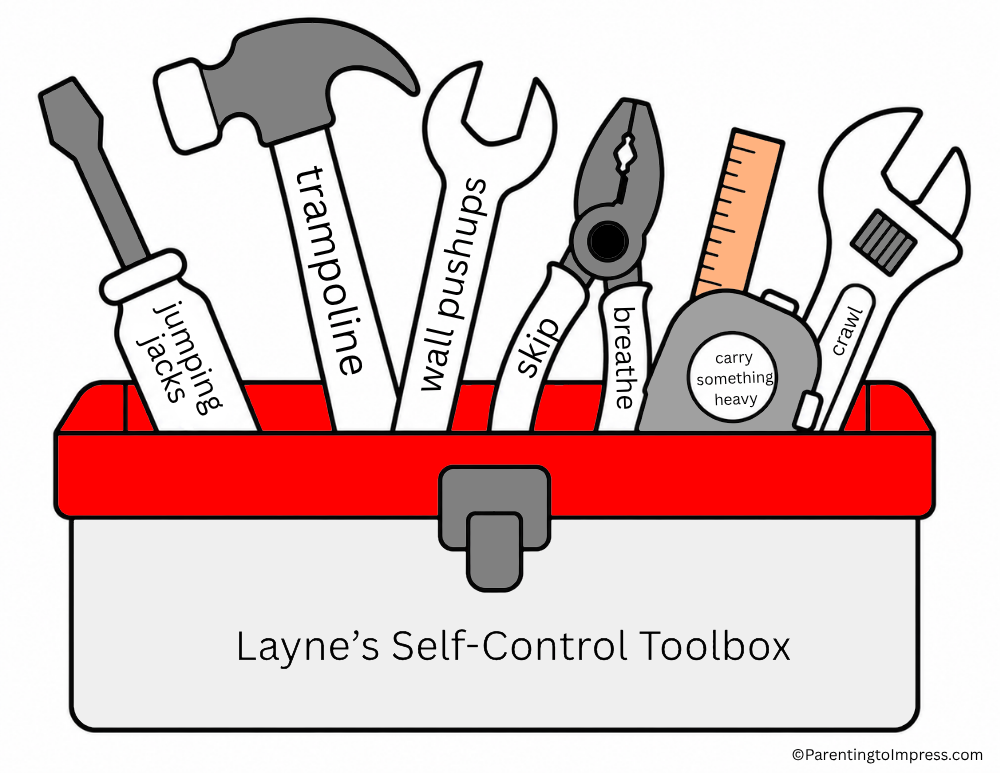
My Self-Control Toolbox
To help my boys, I created a simple visual “toolbox” chart on the refrigerator. It listed different sensory options so I could give the boys ideas when they needed calming. Over time, they began using it to choose their own strategies. Print your own self-control toolbox here for free.
This won’t happen overnight, and the goal is not perfection. It is helping our kiddos recognize signals early and learn healthy ways to respond before emotions take over.





Heidi, this is such a good article. I’m going to try to put it into practice. I think it could really help my toddler to have a few “tools” in his box.
You have such great insight!!
Thankful for your life and ministry
Emily – So glad it was helpful! Thank you for sharing. Reach out if you have any questions. –heidi
Hello, what a wonderful resource! Do you have any suggestions for further study on this topic? My older son struggles with BIG emotions and it’s hard to calm him. Thank you for your wise advice!!
Ulyana – I am so glad that you found this topic helpful!
There are multiple tips on this blog for sensory overload. I invite you to check these out. https://parentingtoimpress.com/tag/sensory-processing-disorder
For big emotions, here are blog posts as well – https://parentingtoimpress.com/?s=emotions
Please reach out with any additional questions. –heidi