I love having a month set aside to focus on gratitude. And November is just around the corner!
In the busyness of everyday life, it is easy to focus on what we want, what we don’t have, or what isn’t going right. November gives us a chance to slow down and help our children see the many ways God blesses us.
The good news? Teaching gratitude doesn’t have to take a lot of time or preparation. Small, simple moments can help our children develop a thankful heart.
Here are six ideas you can begin using with your family this month!
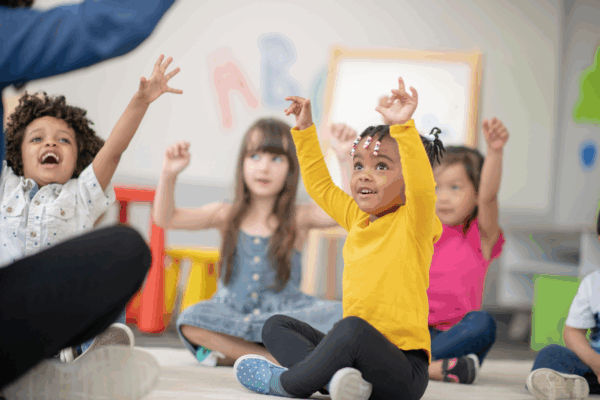
1. Sing a Thanksgiving Song
I love this idea because it requires no prep or supplies! Whether in a home or classroom, begin every meal with this simple Thanksgiving song.
Thank You, Father
Tune: Where Is Thumbkin?
Thank you, Father
Thank you, Father
For this __________
And Your many blessings
And Your many blessings
Amen, amen
Let each family member or student take a turn filling in the blank. Thank God for the food, a sunny day, a friend, or something special that happened.
You can also sing this song in the car, before bedtime, or during family devotions. Repeating the song throughout the month gives children lots of opportunities to practice saying thank you.
Find more Thanksgiving songs.
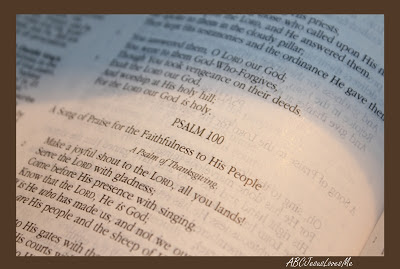
2. Read Bible Verses About Giving Thanks
Help your children learn that gratitude is more than saying thank you. It is recognizing God’s goodness and thanking Him for His blessings.
Choose one short Bible verse to read each day. Talk about what the verse means and how your family can live it out.
Psalm 100 is a wonderful passage to learn together during November. You could read one verse at breakfast, repeat it during the day, and say it together before bed.
Find Thanksgiving Bible verses and free coloring printables.
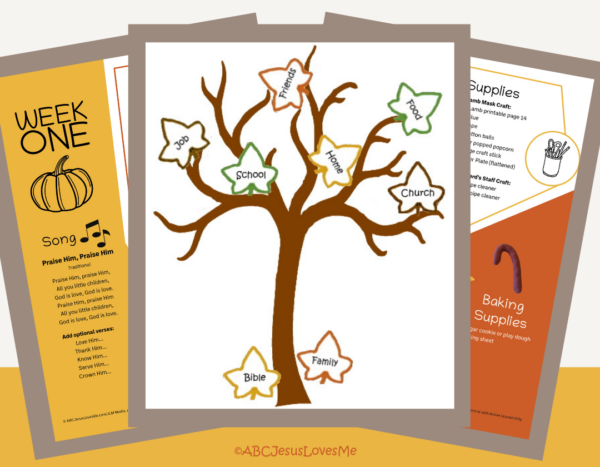
3. Make a Thanksgiving Tree
Oh how I love this tradition. A Thanksgiving Tree is a simple way to help children see their blessings grow throughout the month.
Cut out paper leaves and place them near a small branch, tape them to a wall, or string them together as garland. Each day, invite your child to name something he or she is thankful for. Write the words on a leaf and add it to your tree. All of these supplies are included in the ABCJesusLovesMe Thanksgiving Gratitude Workbook, pictured above.
To change it up, for a few years our family wrote our blessings on paper leaves to create leaf garland. I love having a simple way to remember God’s goodness!
Your child or student might be thankful for a favorite toy, a grandparent, a good meal, or a fun day outside. Remind your children that blessings don’t have to be big or expensive to be worth thanking God for.
For more ideas, visit Activities to Give Thanks.
4. Read Books About Gratitude and Giving
Books give us a wonderful way to talk with children about being grateful for the many blessings we’ve been given and thinking of others. After reading a story, ask a few simple questions:
- What was the character thankful for?
- How did someone show kindness?
- What is something we can thank God for today?
- How can we give to or help someone else?
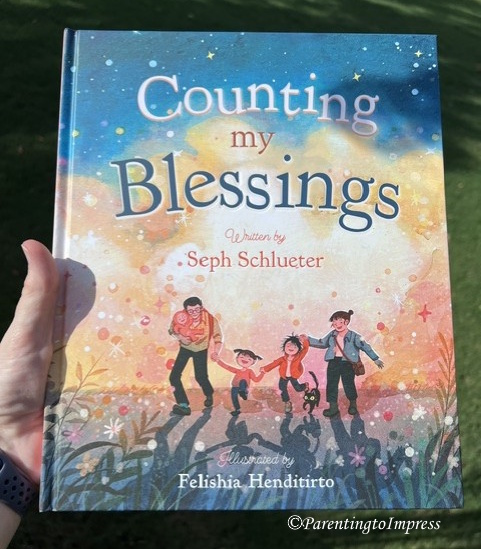
One book to add to your November reading is Counting My Blessings by Seph Schlueter (ad*), the singer of the song “Counting My Blessings.” It is a great opportunity to connect a familiar song with conversations about recognizing and thanking God for His blessings.
For ages 4–8, Counting My Blessings book encourages children to count 1, 2, 3, and all the way to infinity as they recognize God’s goodness. But what makes this book special is its illustrations. They draw the reader in and are filled with meaningful details.
It all begins on the title page, which I missed during my first read-through! A little boy waves goodbye to his friend as she moves away. He then learns that “God’s blessings are with [him] wherever [he] goes. All [he] has to do is simply look around and search for [the] wonderful gifts to be found.”
The illustrations add so much depth to the story. You could read this book again and again and still discover details you missed before!
Explore my list of books about gratitude and giving to find more stories to share with your children or students.
5. Make a Thanksgiving Recipe
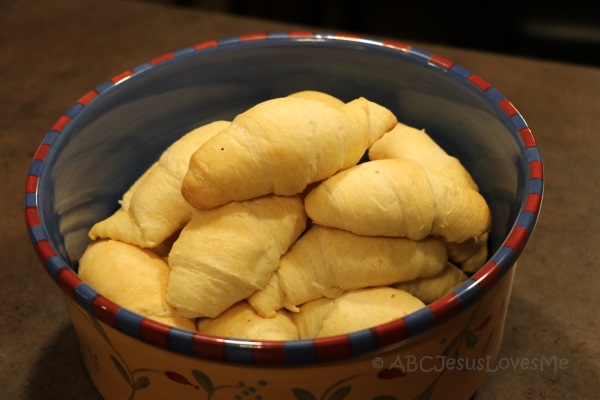
Food can create wonderful opportunities to practice gratitude! One of my favorite Thanksgiving foods is the Gratitude Roll.
Hiding blessings inside crescent rolls has become a fun and meaningful tradition for our family. As we enjoy the rolls together, we take time to share what we are thankful for.
Find more Thanksgiving recipes.
6. Fun Thanksgiving Crafts
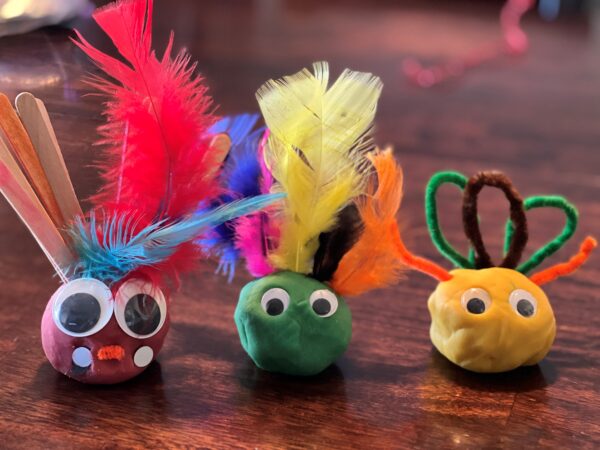
Crafts don’t have to be complicated or time-consuming, and they shouldn’t require a lot of work from the adult. Instead, give your child play dough and simple craft supplies, such as feathers and googly eyes, and let them create their own turkey. The goal is to encourage creativity, not to make a perfect craft! Then talk about gratitude while the children create.
Find more simple Thanksgiving activities and crafts.
Give Thanks in All Circumstances
“Be joyful always; pray continually; give thanks in all circumstances, for this is God’s will for you in Christ Jesus.”
1 Thessalonians 5:16–18
Teaching gratitude doesn’t mean our children or students will never complain or struggle to be thankful. It means we keep pointing them toward God’s goodness, one conversation and one small moment at a time.
You don’t have to do all six ideas. Choose one that fits your family or classroom and enjoy making it a tradition.
Which Thanksgiving tradition will you begin with your family this November? I’d love to hear your ideas!

*Thank you to Frontgate and Zonderkidz for the opportunity to share my honest review of this book in exchange for a free copy.




Leave a Reply