There was a season in our home when every conversation with my husband or a friend seemed to happen in fragments.
We would start talking, and within seconds someone needed a drink, had an urgent story to tell, or absolutely had to ask a question that could not wait another minute.
Can you relate?
Over time, I learned something important: teaching a child not to interrupt is not about silencing them or making them feel unimportant. It is about helping the child learn patience, respect, and self-control.

Start with Realistic Expectations
First, remember this: preschoolers talk—a lot. And that is completely developmentally normal. Children are full of thoughts, questions, observations, and stories. Talking helps grow language skills and strengthen connection.
But learning to wait? Practicing patience and self-control? Those are skills, and skills take time to develop. Instead of becoming frustrated, try viewing interruptions as opportunities to teach.
Teach a Respectful Way
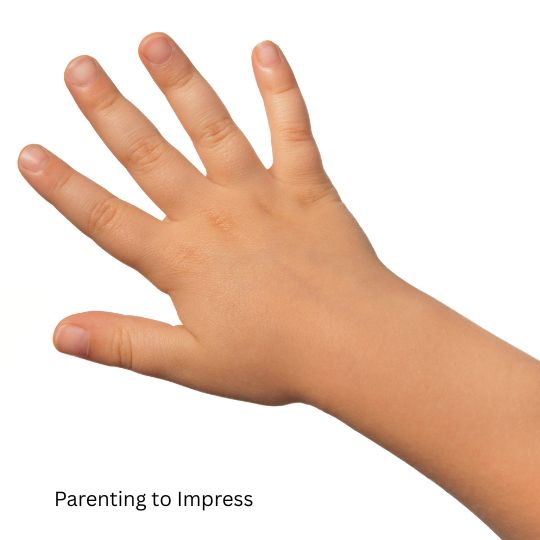
When my children needed me while I was talking to another adult, I taught them to quietly place a hand on my arm or leg. I would gently place my hand over theirs to say, I see you. I will talk to you in just a moment.
Then, when there was a natural pause in the conversation, I would tell the adult, “Excuse me for just a moment,” and turn to my child.
This simple habit reduced whining, repeated interruptions, and frustration for everyone. More importantly, it taught an important lesson: You matter, but there is a respectful way to wait.
Of course, I also taught the difference between an emergency and an ordinary question. A hurt sibling or dangerous situation deserves an immediate interruption. Wanting to share a funny story can usually wait a few minutes.

Training to Wait
Preschoolers learn best through play, so we practiced. Using favorite dolls, stuffed animals, superheroes, or toy animals, we acted out different situations:
- One character interrupts politely
- One interrupts impatiently
- One waits respectfully
Then I would ask, “What should Bear do?”
Role-playing removes pressure and gives the child a chance to practice before real-life moments happen.
Once the child understood the concept through play, I began expecting the same behavior in everyday life. If one of my children forgot and interrupted, I would gently take their hand and place it on my arm—just like we had practiced—while calmly continuing my conversation.

Protecting Our Marriage
When my husband and I were talking and interruptions started, I often reminded our children: “Daddy comes first.”
Before anyone gasps, hear me out.
My children always knew they were deeply loved. But they also learned that Mommy and Daddy protected their marriage—and that was healthy for them to see. Children feel secure when parents are connected. One of the greatest gifts we can give a child is a strong, healthy marriage. Making space for conversations—even short ones—shows the child that relationships matter and require intentional care.
One way we modeled this was by protecting a few uninterrupted minutes for my husband and me to talk when he came home from work.

1. Prepare the Child Ahead of Time
One of the best things I learned was to be proactive. Before Daddy walked through the door, I explained what was going to happen.
You might say: “Daddy is coming home soon. You can have five minutes to hug him and tell him about your day. When the timer goes off, Mommy and Daddy are going to talk for a few minutes. You can quietly play with blocks, and after that Daddy will come play with you.”
Setting expectations ahead of time helps the child know what is coming instead of feeling surprised or pushed aside. For younger children, a visual timer can be incredibly helpful. Seeing the countdown makes waiting feel more predictable.
2. Create Special “Wait Time” Activities
It also helped to have a few activities that were only available during Mommy-and-Daddy conversation time.
Simple ideas include:
- A basket of books
- Magnetic tiles or blocks
- Coloring pages
- Puzzles
- Audiobooks stories
- Quiet sensory bins
- A “special box” that only comes out during adult conversation time
Sometimes just rotating toys makes them feel new again.

Polite Interruptions Are Still Interruptions
Have you ever heard: “Excuse me…excuse me…excuse me…MOM!”
Technically polite? Maybe.
Still interrupting? Absolutely.
Sometimes the issue is not the words but the lack of patience and self-control. This is where consistency matters. Follow through and show the child that placing a hand on your arm and waiting respectfully truly works. When children trust that they will be heard, waiting becomes easier.
Like every skill, this takes repetition and practice—but children absolutely can learn it.

Focus on the Heart, Not Just the Behavior
At the end of the day, interrupting is not only a manners issue. Often, the child is feeling impatient, craving attention, or struggling with self-control. That means this is as much a heart issue as a behavior issue.
Teaching love – which includes patience and kindness (I Corinthians 13:4-8) – takes time. Training takes repetition and consistency. But over time, those little lessons add up.
And one day, you may realize something wonderful: you just finished an entire conversation with your husband or friend without interruption.
Even better? You helped your child take one more step in learning how to love others.