Updated blog post from July 1, 2010
There are seasons of parenting that can leave even the strongest mom feeling worn out.
Over the past few months, I have had several conversations with a dear friend who has been struggling in raising her son. Her girls are obedient with the normal challenges, but her son? He is one of those spirited blessings who keeps everyone on their toes. You know the kind—strong-willed, big feelings, lots of energy, and somehow able to wear out even the most patient parent by lunchtime. One word kept coming up in our conversations:
Train.
As parents, we often jump straight to discipline when something is hard. But I learned with Bubs that there are things some children simply do not instinctively know. Because of that, punishment alone will not fix the problem.
Sometimes, what a child truly needs is training.

Some Children Need to Be Taught What Seems Obvious
This may sound silly, but Bubs and I actually spent time practicing how to pull up his covers. He would wake up in the middle of the night feeling cold. Instead of simply pulling up the blanket, he would cry out, lose control, and wake everyone in the house. We were exhausted.
One afternoon, when everyone was calm, we climbed into his bed and practiced.
- Pull up the blanket.
- Lay back down.
- (Pretend to) Go back to sleep.
That was it. And honestly? It worked. Within a short time, he stopped waking up in a panic because he had learned what to do. That experience changed the way I parented.
Instead of asking, “How do I stop this behavior?” I began asking, “Does he actually know what to do instead?”
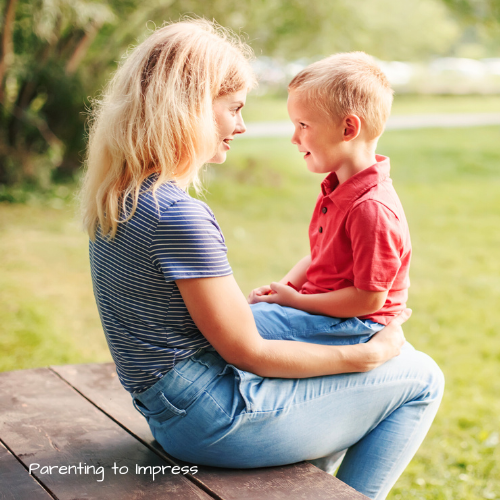
Training Happens Before the Hard Moment
Here is another example.
Bubs has always struggled with volume control and eye contact. Walking into a restaurant and expecting success without preparation was frustrating for everyone.
So we practiced at home. We practiced restaurant voices in the living room. We practiced making eye contact before conversations. Before interacting with someone, I would gently remind him and let him practice first so he felt prepared.
Did it solve everything overnight? Absolutely not. But little by little, he improved because he had been taught, not just corrected.

Practice Calm Before Chaos
Some training takes time. For many years we worked on staying-in-control skills.
When emotions were calm, we talked through acceptable ways to regain control:
- Take deep breaths
- Jump on the trampoline
- Read a book
- Take a quiet break
- Squeeze something soft
- Move their body in a healthy way
The key? We do not train in the middle of the meltdown.
When emotions are high, brains are overwhelmed. No one is learning well in that moment—not the child and probably not the parent either. Training happens when everyone is calm and the situation is controlled. Then, when hard moments come, the child already has a plan in mind.
Role Play Is Powerful
Sometimes children need to practice a skill before they can actually use it.
If your child struggles with something, ask yourself: Can I train this?
Could you:
- Practice through role-playing?
- Act it out with stuffed animals?
- Pretend play the situation?
- Walk through expectations ahead of time?
If a child struggles at church, practice sitting quietly at home. If transitions are hard, rehearse what happens next. If a child struggles sharing, role play with toys.
Children often rise to expectations when they have been shown what success looks like.

Natural Consequences Can Become Training
Here’s another one…At times my kiddos went through a door-slamming phase. Instead of constant reminders, they practiced opening and shutting the door quietly twenty times.
No yelling. No lecture. Just practice doing the right thing.
Funny enough, slamming suddenly becomes far less exciting. Natural consequences can sometimes become opportunities for training.
Discipline Has a Place, But Training Changes Behavior
Please hear me: discipline matters. Children need – and crave – boundaries and consequences.
But sometimes, especially with spirited or ADHD children, consequences alone are not enough. Some children need more teaching, more repetition, and more practice.
Not because they are bad. Not because you are failing. But because they are still learning skills that do not come naturally. And honestly? Many of us adults are still learning too.
So if you are struggling with a behavior right now, pause and ask yourself: Does my child need discipline…or more training?
That small shift in thinking may change everything.

You Will LOVE This Planner!
And the 2027 Be Intentional Planners are better than ever! The simple planners help you track schedules, meals, goals, to-do lists, Bible verses, and more—all in one place. 💚
The updated layout was designed with your feedback in mind, with NEW Tracking Charts (in the Small Planner) and helpful spaces to make planning a little easier.
At just $16, the hardest decision is simply: Large or Small? 😉





Leave a Reply