On the way home after a special date with my son, Little Man (17), we were talking through something he’s been wrestling with. After he finished, I asked, “Would you like to hear what I am thinking?” When he said yes, I responded, “I love how passionate you are about this. But my goal for you is simple—I want you to bring glory to God in how you love, serve, and grow.”
When I think about that, I can teach him the Bible, take him to church, and show him how to spend time with God. Those things give him tools for spiritual growth.
I can teach him to serve by expecting him to help in our home, giving opportunities to serve others, and modeling it myself.
But teaching him to truly love others—that’s character. And character isn’t built in big moments. It’s formed little by little, in everyday situations. More often than not, it’s caught through what the child sees and experiences, not just what the child is told.
Let’s get practical.
Use Teachable Moments
The best character training doesn’t typically happen during a sit-down lesson. It happens:
- when a toy is grabbed
- when a mistake is made
- when kindness is shown
These are the moments when the child is most ready to learn.
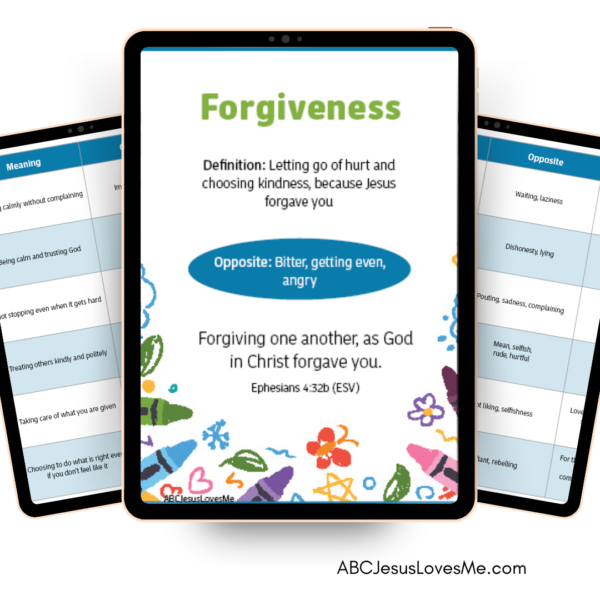
To help you teach godly character, I have created the Character Training printable. Keep the character cards nearby—on the fridge or in a binder. When something happens, connect the behavior to the trait. Keep it short and meaningful.

Start with Simple, Clear Truth
Children don’t need long explanations—they need clear truth. When a situation comes up, name the character trait you see in a way the child understands:
- That was honesty—you told the truth.
- That choice was selfish—thinking only about what you wanted, not how it affected your brother.
- That character in our book was kind when he helped his friend even though it took him more time.
Using quality books, movies, and real-life moments helps the child connect character to everyday life.
Children sometimes understand better when they can see both sides. Instead of only saying what is right, also explain the opposite:
- Kindness is helping others. Unkindness is hurting others with our words or actions.
- Patience is waiting calmly. Impatience is getting upset when we have to wait.
If putting this into words doesn’t come naturally, the character cards give you simple definitions and opposite explanation so you’re not searching for what to say.

Point Back to Scripture
Character isn’t just about behavior—it’s about the heart. When you connect a trait to God’s Word, the child begins to understand why it matters:
- Exodus 34:6 shows that God is patient. When we are patient, we are being like Him.
- Noah showed obedience by trusting God and building the ark.
Over time, these truths become part of how the child thinks and responds.
Model It Daily
This is the part that matters most. We can have the best tools, the best words, and the best intentions—but if our children don’t see it lived out, it won’t take root. Our children are always watching to see if we are living what we are speaking.
When you apologize, show patience, choose kindness, and speak truth, you are giving a living example of godly character. This is how character is caught.

Encouragement for You
You are shaping a child’s heart in ways that truly matter. Not through perfect teaching—but through consistent, everyday moments.
Keep going. Keep pointing the child to truth. Those small seeds of character are growing into something strong and lasting.
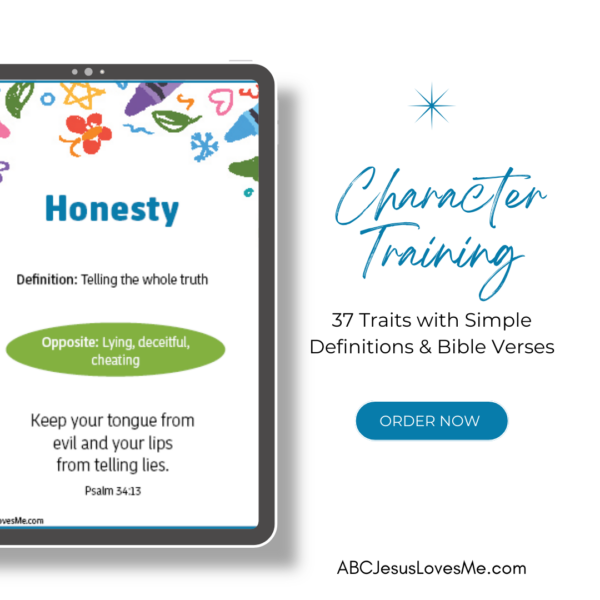
Training a child’s heart can feel overwhelming – especially when the child asks big questions and you’re not sure how to explain them. The Character Training, 3rd Edition download gives you 37 character traits with simple definitions, opposite examples, and Scripture so you always have clear, confident answers. Designed for ages two through the teen years, it helps you build a strong foundation of character one simple moment at a time.