Last week I began sharing our experience at the Creation Museum. If you missed it, be sure to tap to read practical tips, what surprised us, and what I wish we had known before visiting.
Now it’s time for the 2nd highlight of our road trip—the Ark Encounter. Standing beside the life-sized Ark was an experience I’ll never forget. Here’s what surprised me most, what I learned, and the tips I hope will help you make the most of your visit.
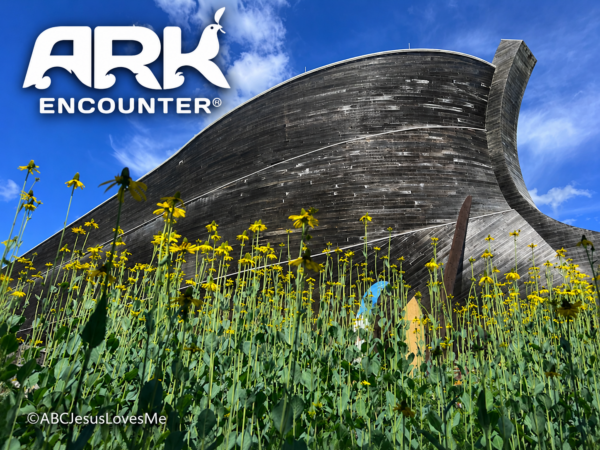
Visiting the Ark Encounter
The next morning, we packed up the van and made the drive to the Ark Encounter in Williamstown, Kentucky. The drive from Florence took us about 30 minutes.
One thing to know before you arrive is that parking works differently than it does at the Creation Museum. Instead of walking from the parking lot to the entrance, you’ll board a shuttle that takes visitors to the Welcome Center. Walking isn’t an option, but the shuttle ride is quick.
Just as we had done the day before, we chose to enjoy the outdoor attractions while the temperatures were still comfortable. I would absolutely recommend this approach if you’re visiting during the warmer months. Also, we were told the Ark tends to be less crowded in the afternoon.
Explore the Grounds First
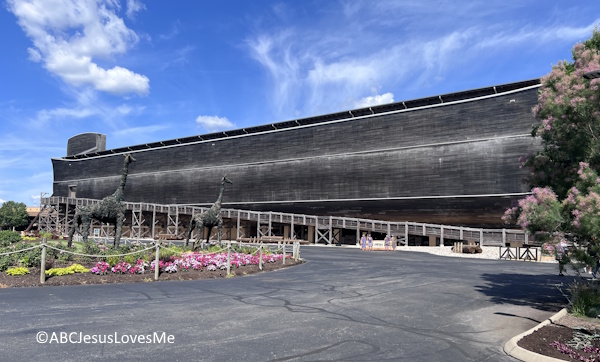
Although the Ark is the big attraction, don’t overlook everything surrounding it. The grounds are beautifully landscaped and provide some wonderful photo opportunities with the Ark in the background. We enjoyed strolling the walkways and it was a relaxing way to begin the day.
Be sure to make time for the Ararat Ridge Zoo. While some of the animals are also found at the Creation Museum, it’s still worth visiting. Families with young children will also appreciate the free carousel and playground to burn off a little energy before heading inside.
My First Impression of the Ark
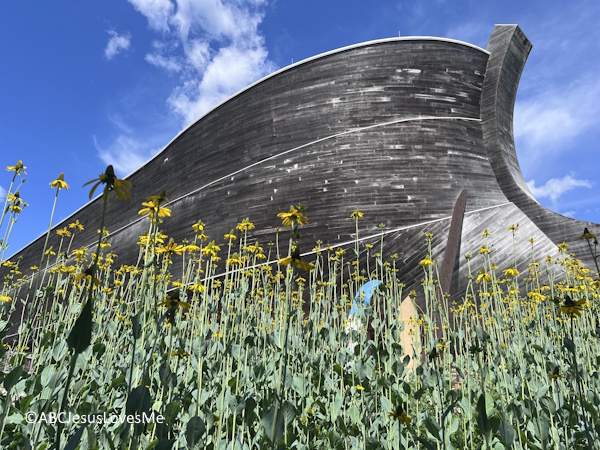
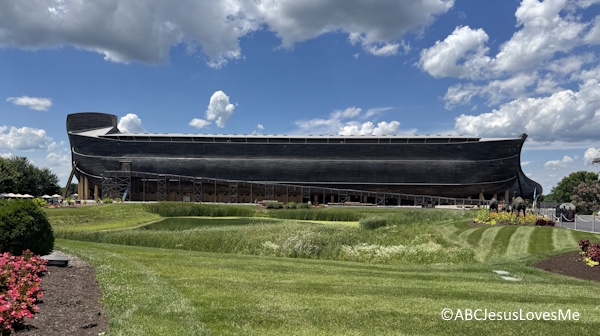
Nothing prepared me for seeing the Ark in person. It is absolutely massive.
Standing in front a structure measuring 510 feet long, 85 feet wide, and 51 feet high gives you an entirely new appreciation for the size of Noah’s Ark described in Scripture. The craftsmanship of the timber-frame construction is beautiful, and simply standing outside looking at Noah’s obedience was a humbling experience.
Yet despite its incredible size, the inside wasn’t what I expected. Not even close.
Growing up, my mental picture of Noah’s Ark came from children’s Bibles—bright colors, smiling giraffes, elephants sticking their heads out of windows, and pairs of familiar animals walking aboard.
The Ark Encounter isn’t that.
Instead, it’s a carefully researched museum exploring what life aboard the Ark may have been like based upon the Scriptures, artifacts, and fossil records.
There Is a Lot of Reading
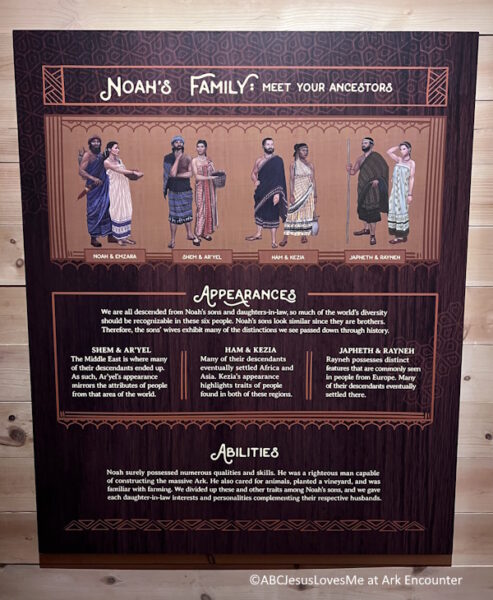
Just as at the Creation Museum, there is an incredible amount of information throughout the Ark.
Every floor contains detailed displays explaining biblical history, possible Ark construction methods, animal care, food storage, ventilation, waste management, Noah’s family, and much more.
If you enjoy reading, you’ll likely love it.
If you or the people who are with you don’t like to read or are expecting moving displays and interactive exhibits—you may be surprised.
I don’t say that as a criticism. I simply wasn’t mentally prepared beforehand.
The Animals Aren’t What You Expect
Another surprise was the “animals” themselves.
The Ark Encounter reminds visitors that Noah did not bring two of every modern-day species aboard the Ark. Instead, he brought representatives of each biblical “kind,” which Answers in Genesis describes as closer to a family classification than today’s species classification.
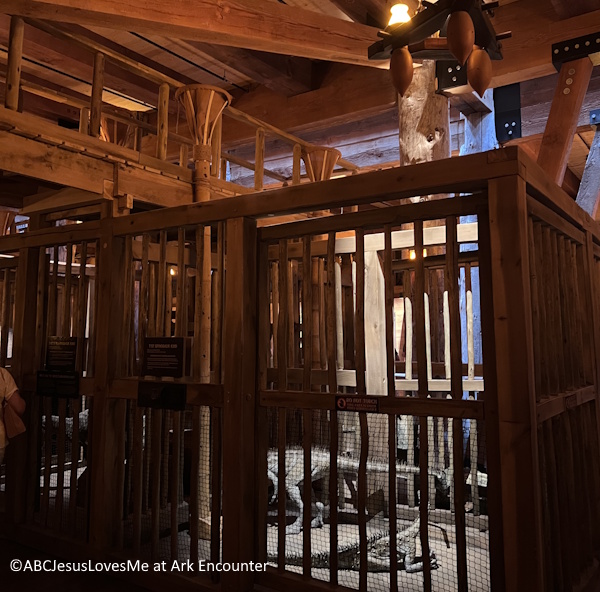
Because of that, many of the animal models don’t resemble the animals we’re familiar with today. Instead of cows, lions, zebras, and giraffes, you’ll find life-sized sculpted prehistoric-looking creatures representing ancestral animal kinds among tightly-barred cages.
When I first walked through the exhibits, I found myself thinking, These don’t look like the animals from my children’s Bible! Then I remembered—that’s exactly the point the museum is making.
Knowing this ahead of time may help set expectations, especially if you’re visiting with children.
One Part I Especially Loved
As a farm girl, one part fascinated me. Rather than focusing only on the animals themselves, the exhibits explore practical questions many people have wondered about:
- How were the animals fed?
- Where did the water come from?
- How was the manure managed?
- How could only eight people care for so many animals?
Seeing the proposed systems for feeding, watering, ventilation, and cleaning gave me a new appreciation for the planning that would have been required. And AI was not available back then to hash out the details.
A Few Practical Things to Know
The inside of the Ark is intentionally dimly lit to help create the feeling of being inside a large wooden ship. While the atmosphere appropriately sets the mood, I occasionally had to pull out my phone flashlight just to read some of the exhibit labels.
Once again, I wished I had packed my noise-canceling earbuds. Between conversations and nearby playing videos, the earbuds would have helped me focus on the text of the displays.
The Ark has three levels, and you can explore them in whatever order you’d like. Ramps connecting the floors are located toward the west end of the ark, while elevators are available near the center. We were told the second floor tends to be the busiest. Even on a day that was only moderately busy, there are displays we didn’t read or animals we didn’t view because the crowds were too large.
Helpful Tips for Visiting the Ark
Here are a few things I wish someone had told me before our visit:
- Read Genesis 1-9:17 before arriving. Read these stories with your children as well.
- Don’t rush through the outdoor attractions. They are part of the experience, not just something to do while waiting.
- Wear comfortable walking shoes. You’ll get a lot of steps in.
- Bring a light jacket if you tend to get cold indoors. The museums are kept at a cooler temperature.
- Ask for free cups of ice water at any restaurant or snack location. This helps cut costs.
- If you typically purchase drinks (pop or vitamin water), you can purchase refillable souvenir drink cups. These cups allow for unlimited fountain drink refills through the day at both the Creation Museum and the Ark Encounter.
- If the ramp leading to the Ark entrance is open, take it. The view looking back across the property is worth the walk.
- Guidebooks are available for the kids. I found them to be more for before or after you visit. Especially with the Ark being so dark, it would be hard to use them during a visit. I found the K-2 book to be pretty difficult, unless an adult is going to greatly assist.
Our Thoughts After Visiting the Museums
We spent about five hours at the Creation Museum on Monday and another five hours at the Ark Encounter the following day. We left with a deep appreciation for the incredible craftsmanship, thoughtful research, and biblical perspective presented throughout both attractions. It’s amazing how often we’ve found ourselves thinking back to what we saw and learned.
For us, trying to see both in one day would have felt overwhelming, while three days wasn’t necessary. However, if you’re visiting with young children and prefer shorter visits with the flexibility to return the next day, the 3-Day Flex Combo Ticket may be a great option.
If I had one piece of advice for first-time visitors, it would be this: Come expecting a museum, not a theme park.
The Creation Museum and Ark Encounters are designed to make you think. You’ll spend far more time reading, reflecting, and considering Scripture than watching moving exhibits or interactive displays. Once I adjusted my expectations, I appreciated the experience much more.
Are the Creation Museum and Ark Good for Young Children?
Before our trip, I would have confidently answered, “Absolutely!” After visiting both attractions, though, I’m still pondering that question.
My answer is yes—with realistic expectations. I also think it depends on your child’s age, maturity, personality, interests, and attention span.
Much of the experience inside both the Creation Museum and the Ark Encounter is reading-based and geared toward older children and adults. Even among my own children, I know some would have loved reading every display, while others would have been ready to move on much sooner.
Young children will likely enjoy seeing the enormous Ark, riding the carousel, visiting the zoos, and quickly walking through the exhibits. If you’re bringing young ones, don’t try to read every display. Let them enjoy seeing the Ark and larger exhibits, stop for breaks, and spend extra time outside where they can explore and play. Read what they ask you to read. Then maybe return sometime just as adults and take in all of the information.
I would use caution with the Pre-Flood World exhibit at the Ark Encounter. I personally found some of the images to be graphic, especially for children with active imaginations. The exhibits depict the wickedness of the world before the Flood, and I found myself wondering how I would answer a young child’s questions about some of the scenes in an age-appropriate way. Every family is different, but it’s something I think parents should be aware of before visiting.
Final Thoughts on Visiting the Creation Museum and Ark Encounter
Looking back, I’m thankful that my husband and I were able to make the trip.
There were certainly surprises along the way, and a few things I wish I had known before arriving, but that’s exactly why I wanted to write this guide. My hope is that you’ll arrive with realistic expectations, spend your time on the things that matter most to you, and leave encouraged in your faith.
If you’ve visited the Creation Museum or Ark Encounter, I’d love to hear what stood out to you most. Share your favorite tip or memory in the comments below!
See More Family Vacation Tips
- Visiting National Parks as a Family (Grand Canyon, Yosemite, Yellowstone, Rocky Mountains, etc)
- Family Beach Vacation Tips 101 (Where, When, Packing Guide, Meal Planning)
- Visiting Amusement Parks with Preschoolers





Leave a Reply