Lately, I’ve been thinking a lot about that tricky balance we have to strike as moms. Here’s just one area.
You want to teach your child how to navigate the world—things like ordering their own food, asking for help, or advocating for themselves—but you’re also constantly weighing that against keeping them safe.
Then there’s the future to worry about: how do we raise kids who are confident enough to stand their ground and make the right choices, even when their friends are leaning on them to do the opposite?
If you’ve been feeling this weight, know you aren’t alone. I think most of us are walking this same path, asking the exact same questions.
The truth is this: Leadership doesn’t suddenly show up in middle school. Courage doesn’t magically appear in the teenage years. Instead, it starts much earlier.
Read the transcript for this episode.
Teaching Kids Safe Social Skills
I think one reason many kids struggle with confidence is because as parents, we naturally want to protect them.
We tell them not to talk to strangers.
We step in and order for them.
We answer questions for them.
We smooth over awkward situations.
And while our intentions are good, sometimes, without realizing it, our protection can unintentionally rob them of practice for the real world. Now—to be clear—I’m not telling young kids to walk up and talk to random strangers. Instead, I’m advocating for teaching them how to safely and wisely talk to unfamiliar people because real life requires it – at church, the library, the store, and restaurants. Our kids are going to need these skills.
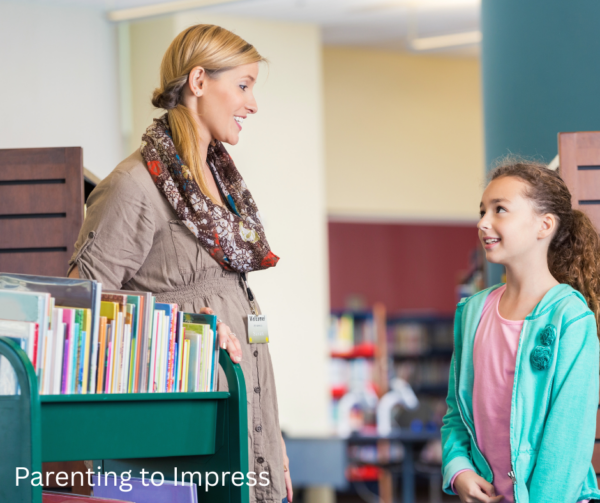
Everyday Ways to Build Confidence in Kids
One of the easiest ways to teach confidence is to use everyday moments. Melanie remembers taking her kids to restaurants and letting them practice ordering their own food. At first, some of them hated it. Some whispered to her, hoping they wouldn’t have to order for themselves. But with practice? They got stronger.
Other great opportunities include:
- Asking the librarian for help finding books
- Talking to church greeters
- Asking a store employee a question
- Checking out at the grocery store
- Introducing themselves at playdates
These moments may feel small… but they are building something big. They are building courage.
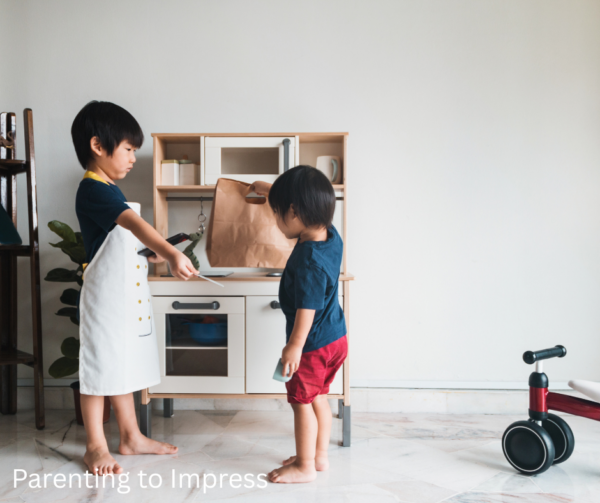
Role Playing Social Skills at Home
Before expecting your child to speak up in public, practice at home. This can be as simple as role-playing in the car: “Okay, when we get to the library, what are you going to say?”
Or pretend play at home: “Welcome to our restaurant! What would you like to order?”
Kids learn through repetition. And when they practice in a safe place first, public situations feel less scary.
Communication Skills Every Child Should Learn
There are a few communication basics that make a huge difference. Teach your child to:
- Make Eye Contact. Eye contact shows respect and confidence.
- Speak Clearly. No mumbling. No whispering. Help them use a strong voice.
- Use Polite Words. “May I please…” “Thank you.” “I appreciate your help.”
- Introduce Themselves. “Hi, my name is…”
These little skills practiced in the safety of your home become lifelong habits.
Parenting a Shy Child with Wisdom
If you have a shy child, I want to encourage you—there’s nothing wrong with your child. Some kids are naturally cautious. Some are naturally outgoing. And as moms, we know our children best.
At the same time, personality should never become an excuse to avoid growth. There’s a balance between pushing too hard… and not stretching them at all. Sometimes courage grows through gentle nudges. One small conversation. One handshake. One question asked.
And over time, those little steps add up.
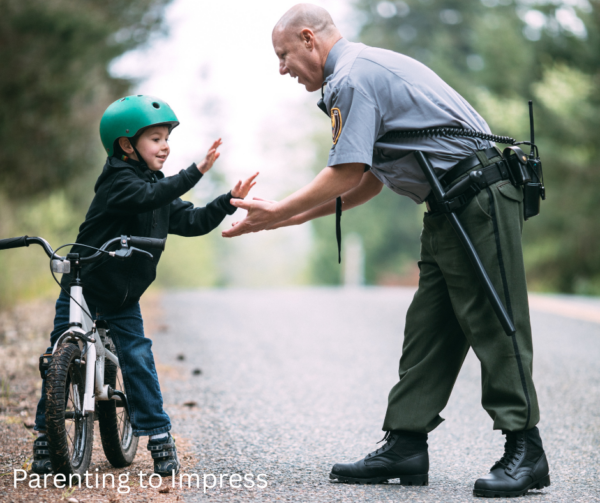
Teaching Kids Safe Stranger Skills
One of the most important things our children can learn is how to get help when they need it.
Teach your child:
- Their full name
- Mom and Dad’s full names
- Your phone number
- How to ask for help
And teach them who safe adults are:
- Police officers
- Firefighters
- Teachers
- Librarians
- Store employees
- Moms with children nearby
These aren’t scary conversations. They’re empowering conversations.
Helping Kids Resist Peer Pressure
Courage isn’t just about talking to strangers. Eventually, courage becomes the ability to say: “No.” “That’s not right.” “I’m not doing that.” “Friend don’t treat friends like that.”
When our kids have spent years practicing small acts of bravery, it becomes easier for them to stand strong when peer pressure shows up. Courage is like a muscle. And every little practice builds it stronger.
Raising Future Leaders Starts Now
Mama, if your child is little right now—this matters. Every handshake, every restaurant order, every polite conversation, every role-play in the car… It all matters.
Because we’re not just raising polite kids, we’re raising future leaders. Children who know how to speak up and how to set boundaries. Children who know how to do what’s right—even when it’s hard.
And that kind of courage? It starts now.